

Most people assume Incognito Mode keeps them safe during video calls. In reality, it only hides your history from others on the same device and does nothing to stop websites, employers, or ISPs from tracking your activity (techradar.com).
Why Online Video Call Privacy Demands Real Security
Online video calls are not automatically private. The data shows that platforms like Google G Suite and Microsoft Teams lack end-to-end encryption, while options like Signal and WhatsApp do offer this critical protection (usa.kaspersky.com). As remote work and digital meetups replace in-person meetings, your conversations are increasingly vulnerable to interception and unauthorized access.

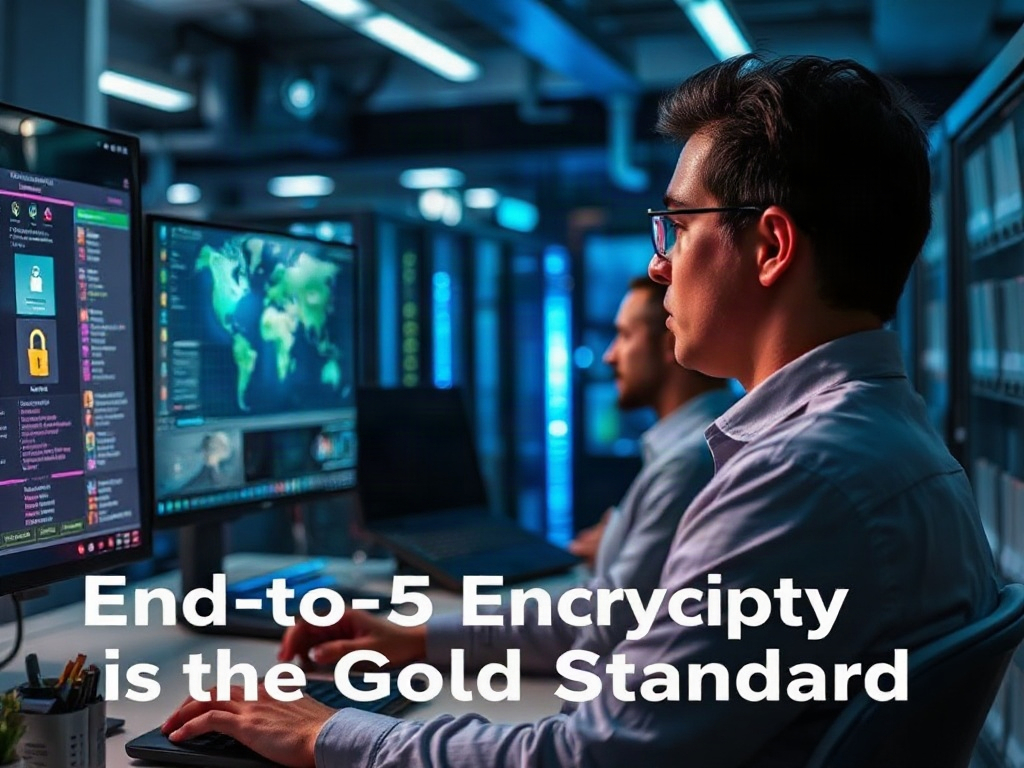
End-to-End Encryption Is the Gold Standard
End-to-end encryption (E2EE) is the only way to guarantee that nobody but the call participants can access the conversation. The data shows that as of May 2026, Discord implemented E2EE for all voice and video calls (techradar.com). Meanwhile, platforms like WhatsApp and Signal have offered E2EE for years. By contrast, Google G Suite and Microsoft Teams do not provide this level of security, so conversations could potentially be accessed by the provider or even third parties.
The actionable step is simple: use platforms that implement E2EE by default for sensitive discussions. If you’re hosting a private call, switching to Signal, WhatsApp, or Discord (post-May 2026) is the most effective move you can make. Anything else exposes your call data to unknown risks. You’ll notice the difference isn’t just technical—it’s about who can and cannot access your private moments.
→ See also: How do i hide my personal info online: Expert Guide for 2026
Not All Platforms Are Created Equal: Compare Your Options
The data shows a clear divide between video call services. According to Kaspersky, the NSA gave its highest privacy scores to WhatsApp, Signal, and chat app Wickr (usa.kaspersky.com). Google G Suite and Microsoft Teams don’t provide E2EE, making them less suitable for confidential conversations.
Here’s what that means for you: choosing the wrong platform is the single largest privacy risk you control. If you’re using G Suite or Teams for calls that matter, you’re trusting the provider (and potentially their legal jurisdiction) not to peek—or be compelled to hand over your data. With platforms like Signal, even the company behind it can’t access your calls.
Below is a simple comparison table to illustrate:
| Platform | End-to-End Encryption | Year Implemented |
|---|---|---|
| Signal | Yes | Prior to 2026 |
| Yes | Prior to 2026 | |
| Discord | Yes | May 2026 |
| Google G Suite | No | — |
| Microsoft Teams | No | — |
The takeaway: Always match the tool to the privacy level your conversation deserves. Don’t assume your current provider is secure just because it’s popular or easy to use.
Multi-Factor Authentication Is Non-Negotiable
Most people get this wrong: strong passwords alone are not enough to secure your video calls. The research from McAfee highlights that implementing multi-factor authentication (MFA) is essential for protecting against unauthorized access (mcafee.com). Why? Because even a complex password can be compromised if it’s leaked or guessed, but MFA provides a crucial second barrier.
You’ll often hear, “Just use a long, random password.” Here’s the thing nobody tells you: attackers don’t need to brute-force a 16-character password if they can phish or steal it. MFA requires a code, device, or biometric proof each time you log in, so even if your password falls into the wrong hands, your account remains locked down.
The practical move: Enable MFA on every platform that supports it, and never reuse passwords between services. This is what actually works. Not the fluffy advice you see everywhere about “strong passwords” alone.
Physical Security: Keyboard Snooping Is a Real Threat
Keyboard snooping is a hidden risk during video calls. Attackers can infer passwords by watching your arm and shoulder movements, a technique that doesn’t require any technical hacking—just keen observation (mcafee.com). If you type a password or other sensitive data while on camera, someone could reconstruct your keystrokes frame by frame.
It’s easy to dismiss this as far-fetched until you realize attackers don’t need to see your screen—just your upper body. This is the kind of security hole almost nobody plugs, because it feels physical, not digital.
Actionable takeaway: Never type sensitive information while your webcam is on, even if you trust everyone on the call. If you must enter a password, turn off your camera first. This simple habit closes off a risk most people never consider, but real attackers exploit.

→ See also: Step-by-step Guide to Understanding Digital Footprint for Beginners
Incognito Mode: Why It Won’t Protect Your Calls
The data shows Incognito Mode only hides your browsing history from others using your device, but does not prevent tracking by websites, employers, or ISPs (techradar.com). János Moldvay, VP of Measurement at Funnel, puts it like this:
Here’s the disconnect: just because your activity doesn’t show up in your browser history doesn’t mean you’re invisible. Your network traffic, including video calls, can still be intercepted or logged by third parties. This is the false sense of security that trips up even experienced users.
Actionable takeaway: If you need genuine privacy, Incognito Mode is not enough. Use encrypted platforms and consider network-level protections (like VPNs)—but never assume private browsing covers your tracks during a video call.
Jurisdiction and Data Routing: Who Else Sees Your Call?
The routing of video call data across multiple borders can expose conversations to foreign legal systems (techradar.com). If your call data travels through or is stored in another country, it can be subject to subpoena or surveillance under that nation’s laws—without you ever realizing it.
This is not a theoretical concern. The simple act of connecting two people on different continents can route video packets through servers around the world. If your provider stores metadata or call content abroad, your privacy is at the mercy of those jurisdictions.
Practical advice: Check your video call provider’s privacy policy for data storage and routing information. For highly sensitive calls, prefer services that explicitly state where data is kept and whether it ever leaves your country’s borders. Sometimes the best privacy move is choosing a smaller, local provider over the global giant—if they provide E2EE and clear policies.
The Age Verification Dilemma: Privacy Trade-Offs
Mandatory age verification is now a reality on platforms like Discord, which require users to submit government ID photos (techradar.com). This is supposed to protect minors, but introduces new privacy risks—especially for anyone worried about how their sensitive information is handled. Previous data breaches on social platforms prove that “just trust us” is not a convincing answer.
If you’re concerned about exposing your personal identity in order to access secure calls, you’re not alone. The balance between security (verifying users are of age) and privacy (not handing over more data than necessary) is still hotly debated. No platform has solved this perfectly.
What can you do? If you must use a platform with mandatory ID verification, consider what information you’re uploading and whether you have alternatives. Secure video calls should never require you to trade one kind of privacy for another—but that’s where the market often leaves us in 2026.
FAQ
How can I tell if my video call is end-to-end encrypted?
Does Incognito Mode protect my online video calls?
Is using a strong password enough for video call privacy?
Are all popular video call platforms equally secure?
→ See also: How Can We Avoid Online Scams and Phishing Attacks
Closing Perspective
Privacy on video calls in 2026 isn’t automatic, and the biggest risks aren’t always technical. The most common mistakes come from misplaced trust: assuming your platform is secure, that passwords are enough, or that Incognito Mode is a magic cloak. The reality is messier.
Choosing the right tool, enabling real protections like end-to-end encryption and multi-factor authentication, and refusing to trade privacy in one domain for exposure in another—these are the choices that actually keep your conversations private. Paranoia is not required; attention is. And as platforms evolve, so should your habits. That’s how you secure online video calls for privacy: not with hope, but with informed action.
Sources
- mcafee.com/learn/how-to-prevent-keyboard-snooping-attacks-on-video-calls
- techradar.com/computing/social-media/discord-just-made-your-voice-and-video-calls-mor…
- techradar.com/computing/browsers/is-incognito-mode-actually-private-heres-the-surpris…
- usa.kaspersky.com/resource-center/threats/video-conferencing-security-how-to-stay-safe
- techradar.com/pro/your-video-calls-could-be-racking-more-airmiles-than-you-think

Comments 0
Be the first to comment!